
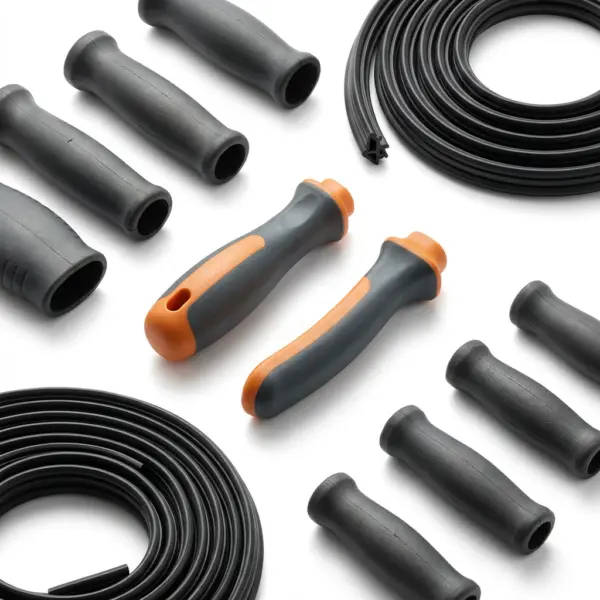
Thermoplastic Polyurethane (TPU) occupies a unique position in polymer engineering — it bridges the gap between rubber and rigid plastic. Unlike thermoset rubbers (which require vulcanization), TPU is melt-processable via injection molding, extrusion, and blow molding. This makes it highly suited for complex geometries requiring rubber-like flexibility, abrasion resistance, and transparency.
TPU Chemistry: Ether vs Ester
TPU consists of hard (diisocyanate + chain extender) and soft (polyol) segments. The polyol type determines major properties: Polyether TPU has superior hydrolysis resistance, low-temperature flexibility (to -60°C), and microbial resistance — ideal for marine, medical, and sports applications. Polyester TPU has superior mechanical strength, abrasion resistance, and fuel/oil resistance — ideal for industrial wear applications.
Key Physical Properties
Shore hardness range: 55A to 70D (much wider than most thermoset rubbers, from rubber-soft to semi-rigid). Tensile strength: 25–65 MPa. Elongation at break: 350–650%. Abrasion resistance (DIN 53516): 30–100 mm³ — among the best of all elastomers. Tear resistance: 40–200 N/mm. This combination of strength, flexibility, and abrasion resistance is unique to TPU.
Processing Methods
TPU is injection molded (most common for complex 3D parts), extruded (tubes, profiles, film), blow molded (hollow parts), and cast from solution for film. Injection molding requires: pre-drying at 80–90°C/4h (TPU absorbs moisture), barrel temperatures 190–230°C, and short residence time to avoid thermal degradation. Blue Diamond’s standard tolerance for TPU injection is ±0.05mm.
TPU Grades Comparison
Foot-traffic grade (Shore 85A ether): non-marking floor protection and shoe soles. Industrial wear grade (Shore 92A ester): conveyor guide rails, wear pads, and rolls. Transparent grade (Shore 85A ether clear): display windows, protective covers, medical tubing. Flame-retardant grade (Shore 70D, UL94 V-0): cable jackets and electronic enclosures.