
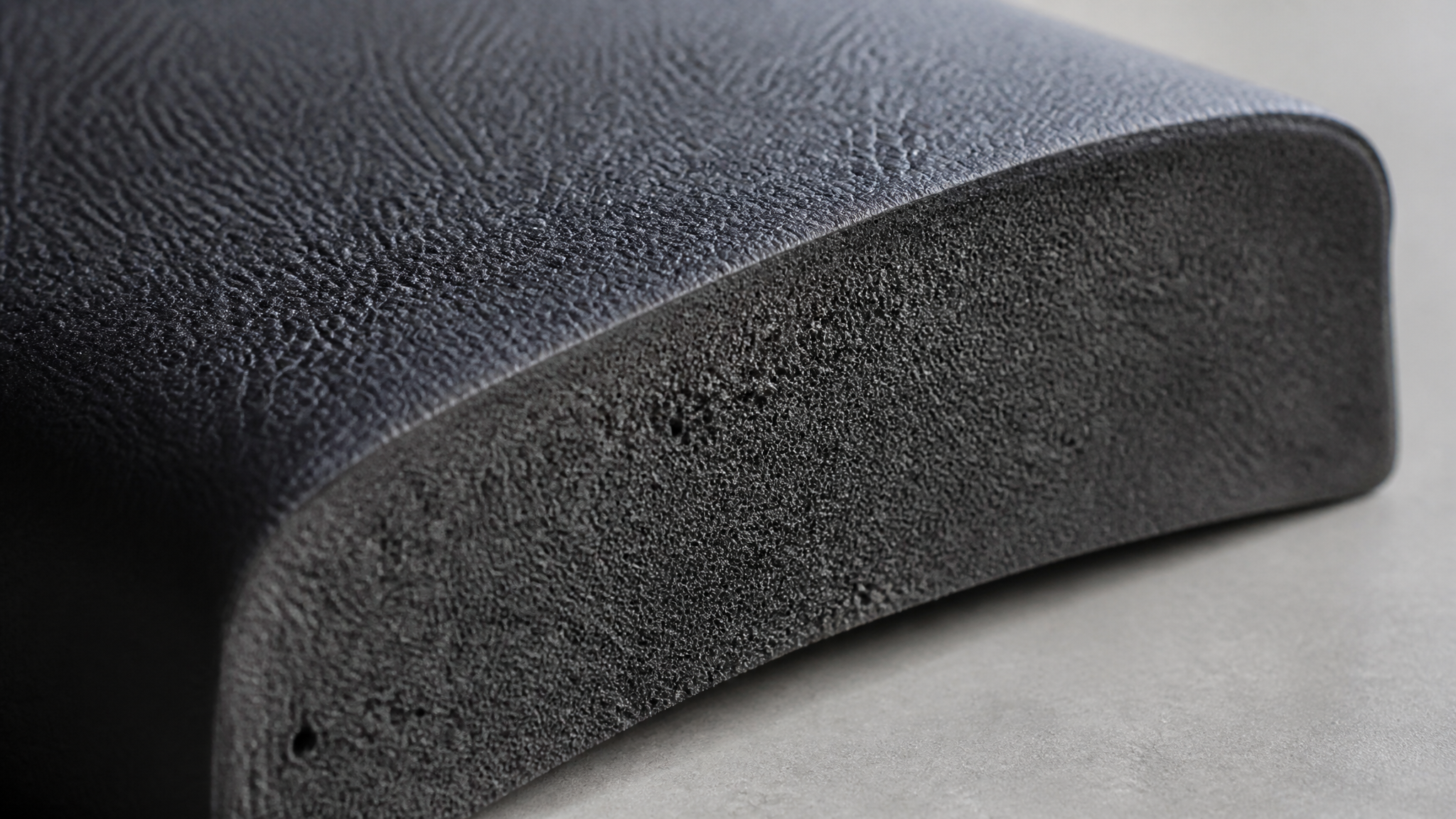
We analyze the chemistry of Self-Skinning Polyurethane. Unlike upholstered foam, the integral skin is chemically bonded to the micro-cellular core during the molding process. This post highlights the antimicrobial properties essential for healthcare furniture and the puncture resistance required for heavy machinery tractor seats.
Discover the chemistry and engineering behind Integral Skin PU Foam (ISF). Learn why its unique self-skinning process makes it the ultimate choice for antimicrobial healthcare furniture and high-durability industrial seating.
Why "One-Shot" Beats "Cut-and-Sewn"
In traditional furniture manufacturing, you have foam, glue, and a fabric or vinyl cover. In harsh environments—like a hospital surgical suite or a muddy construction site—this multi-layer approach fails. The seams rip, the glue fails, and moisture seeps in.
Integral Skin Polyurethane Foam (ISF), often called Self-Skinning Foam, changes the game. It is a single-material solution where the protective outer skin and the soft inner core are created simultaneously in a single molding process.
1. The Chemistry of Self-Skinning: A Molecular Bond
Unlike traditional upholstered products, the "skin" of ISF is not an added layer. It is a result of advanced chemical engineering during the reaction of polyol and isocyanate.
The Molding Miracle: When the PU mixture is injected into a temperature-controlled mold, the material touching the cold mold walls collapses into a high-density, non-porous skin.
The Micro-Cellular Core: Simultaneously, the material in the center expands to form a low-density, flexible micro-cellular core.
The Fusion Result: Because the skin and core are the same chemical mass, they are chemically bonded. There is zero risk of delamination, peeling, or bubbling—a common failure point in "coated" foams.
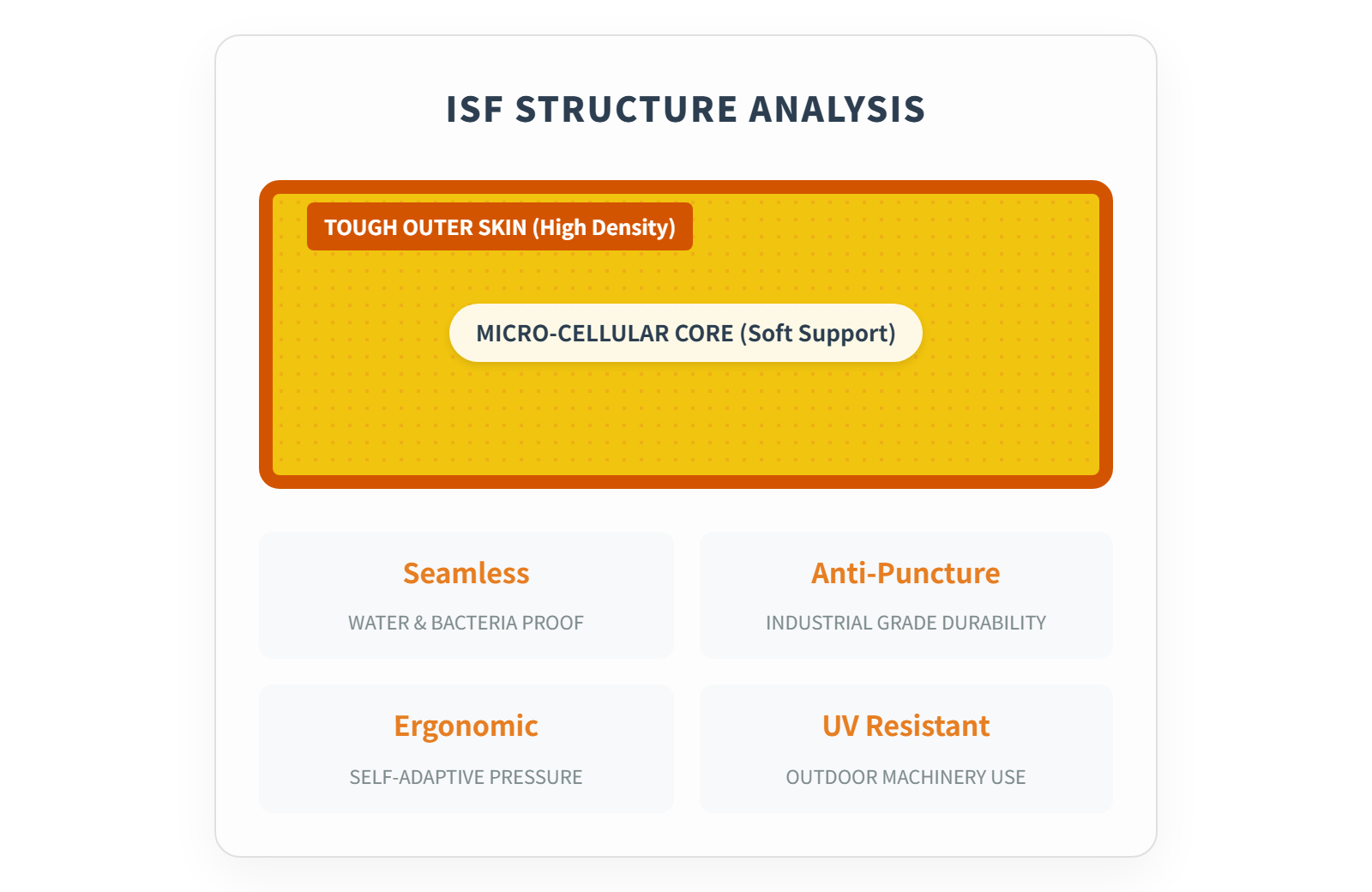
2. Anatomy of Integral Skin Foam (Widget Visualization)
To understand why this material is "indestructible," look at its cross-section:
3. Healthcare Evolution: The Antimicrobial Imperative
In clinical settings, seams are the enemy. Stitches in traditional upholstery trap blood, pathogens, and cleaning chemicals, leading to MRSA risks and fabric degradation.
Seamless Hygiene: ISF is naturally waterproof and non-porous. Medical fluids sit on the surface, making it 100% "wipe-clean."
Integrated Antimicrobial Agents: During production, we can infuse the PU liquid with antimicrobial additives. This creates a permanent barrier that inhibits the growth of bacteria and mold within the material itself, not just on a coating.
4. Heavy Machinery: Built for the "Tractor Test"
For agricultural and construction machinery, a seat isn't just a place to sit; it's a vibration-dampening tool that must survive the elements.
Puncture & Abrasion Resistance: Tractor operators often carry tools. Standard vinyl covers rip easily. ISF’s high-density skin is engineered to resist punctures and constant friction from workwear.
Weathering: Whether it’s 40°C in the sun or -20°C in the snow, ISF doesn't crack. Its UV-stabilized skin prevents the "sun-rot" common in cheaper plastics.
5. Why Engineers Choose Integral Skin Foam (The B2B Advantage)
Design Freedom: Complex 3D shapes, textures (like faux leather), and brand logos can be molded directly into the surface.
Consistent Hardness: We can control the Shore A hardness from very soft (armrests) to firm (bicycle saddles).
Cost Efficiency: While mold costs are higher, the "one-shot" process eliminates the labor-intensive cut-and-sew phase, reducing total production costs for large-scale orders.
Q: Is Integral Skin Foam eco-friendly? A: Modern ISF can be formulated with water-blown blowing agents, eliminating CFCs and HCFCs, making it compliant with strict REACH and RoHS environmental standards.
Q: Can ISF be repaired if the skin is cut? A: While extremely durable, deep cuts can be repaired with specialized PU sealants. However, the seamless nature is its primary benefit, and prevention is its greatest strength.
Q: What is the typical density of Integral Skin Foam? A: The overall density usually ranges between 150 kg/m³ to 450 kg/m³, depending on the required balance between softness and structural support.