Tooling is the highest-risk investment in any OEM manufacturing program. A mold revision can cost $3,000–$30,000 and add 3–8 weeks to a launch. Blue Diamond’s 5-stage tooling development process is designed to eliminate surprises — identifying part design issues, material risks, and process parameters digitally before a single cavity is cut.
Stage 1: DFM Review
Before tooling begins, our engineering team reviews your 3D CAD file for: wall thickness uniformity (targeting ≤3:1 ratio); draft angles (minimum 1° per side for injection, 3–5° for rubber compression); undercuts requiring side actions or lifters; tolerance feasibility based on material shrinkage data; and parting line placement for clean flash removal.
Stage 2: Moldflow Simulation
For injection molded components, we run Autodesk Moldflow (or equivalent) simulation before tooling: filling pressure analysis to verify gate sizing; cooling channel optimization to minimize cycle time and warpage; shrinkage and weld line prediction. Simulation results are shared with the customer and guide final gate/runner system design.
Stage 3: Mold Fabrication
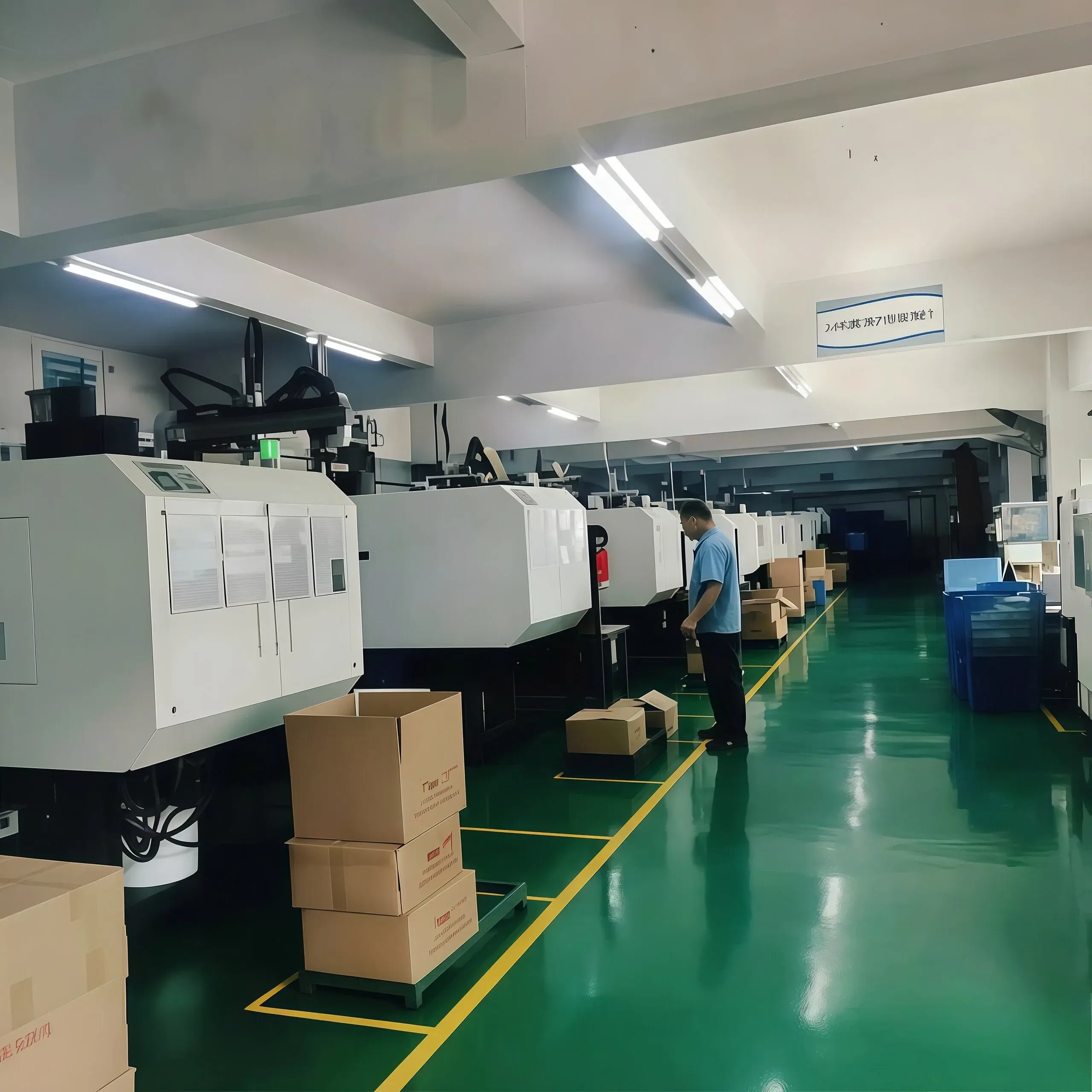
Mold cavities are machined in our in-house CNC machining center using H13 tool steel (standard) or P20 pre-hardened steel (for higher volume). EDM (Electrical Discharge Machining) produces fine surface textures. Target: cavity surface Ra ≤0.8μm for standard, Ra ≤0.4μm for optical. Lead time: 15–25 working days for standard complexity.
Stage 4: T1 Sampling
First tool trial (T1) produces 10–30 sample parts under controlled process parameters. Every T1 sample is 100% dimensionally checked using our 2.5D optical projector. Shore hardness, tensile samples, and appearance are evaluated. DFM deviations are documented and corrective mold action is tracked via our ECO system.